01 · Fitment review
Identify the vehicle and year, wheel diameter and width, bolt pattern, offset, center bore and clearance. The right starting information helps reveal conflicts before a purchase decision.
Services
Make fitment, inspection and delivery requirements explicit before a wheel program moves forward.
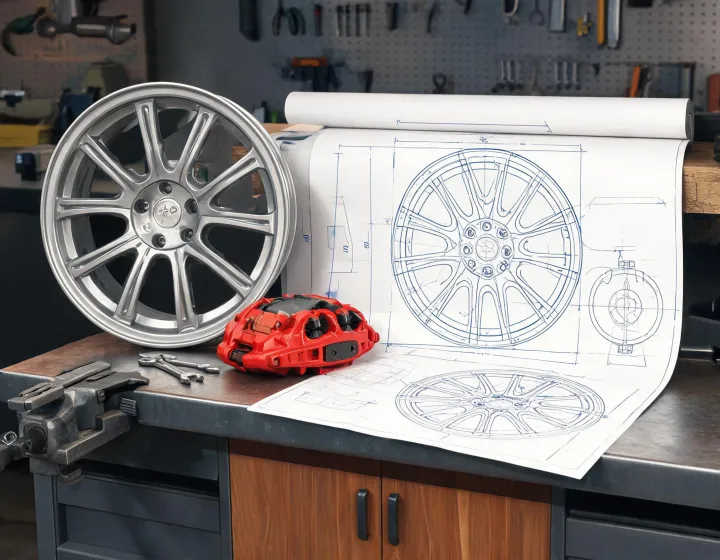
Identify the vehicle and year, wheel diameter and width, bolt pattern, offset, center bore and clearance. The right starting information helps reveal conflicts before a purchase decision.
Record the duty cycle, load rating, finish and relevant drawing revision. Requirements can then be compared with the product information available for the requested wheel.
Define sample needs, test method and acceptance criteria for the intended market. Applicable standards and evidence must be confirmed for each product rather than assumed globally.
Discuss order quantities, packaging, desired delivery windows and replacement needs. Record changes so purchasing and technical teams can work from the same revision.
Provide vehicle platform and year, VIN or OE reference where appropriate, wheel dimensions, PCD, offset, center bore and the maximum required load. Brake and suspension clearance also matter.
Not necessarily. Forged and cast designs differ in process, available geometry and cost. Compare a particular wheel against its documented load, fitment and validation rather than assuming performance from process alone.
Yes. Identify the product, destination market and the document you need, then confirm its scope and currency before using it in an approval decision.
A request for a wheel size alone leaves the bolt circle, load and clearance unresolved. This makes comparison difficult and can delay an informed response.
A shared brief identifies the platform, mounting geometry, operating conditions and acceptance criteria. Open questions can be resolved against a named revision.
Include the technical and purchasing details available today; unknown items can be identified for follow-up.